Your IVF Research Guide: Treatment Choices, Costs, Success Rates and Clinics
Introduction
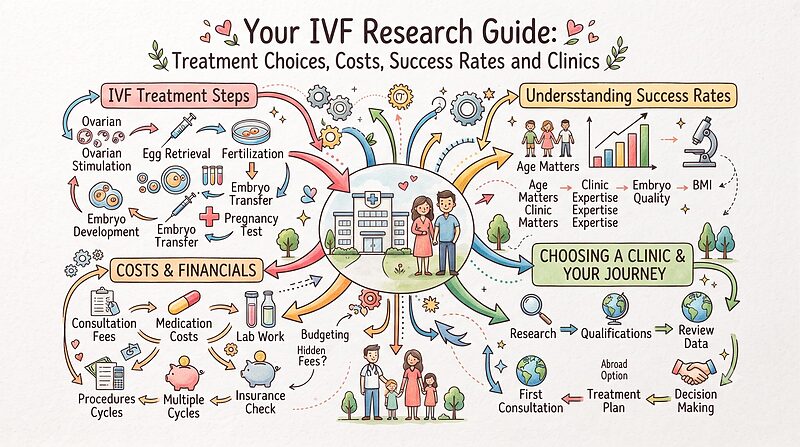
Fertility treatment can feel hard to understand at first. You may find many terms, prices, clinics, and treatment choices online. Some information may also seem confusing or even conflicting. A simple research plan can help you sort through it. IVF stands for in vitro fertilization. Doctors use IVF to help eggs and sperm meet outside the body. They then place an embryo into the uterus. Many factors can shape the treatment plan. These factors include age, fertility history, egg supply, sperm health, and past treatments. This guide explains the main points you should know. It also helps you compare clinics, costs, treatment options, and success rates. Use it as a starting point before you speak with a fertility specialist.
Know What IVF Can Involve
IVF follows a series of steps. However, every person may follow a slightly different plan.
First, doctors review your health and fertility history. They may also order blood tests, scans, or sperm tests. These checks help the medical team understand your fertility needs.
Next, doctors may prescribe medicines that help the ovaries develop several eggs. The clinic checks your response through scans and other tests.
When the eggs reach the right stage, a doctor collects them through a short procedure. The laboratory then combines the eggs with sperm.
Some patients may need ICSI. This method places one sperm directly into an egg. The lab then watches the fertilized eggs as they develop.
A doctor may later transfer an embryo into the uterus. The clinic then advises you about pregnancy testing.
The process can sound straightforward. Yet each stage can involve different decisions. Your specialist should explain each step before treatment begins.
What Happens Before You Start IVF?
Many people focus on the embryo transfer. Yet earlier steps also matter.
Your doctor may first look for possible causes of fertility problems. The evaluation can include both partners when appropriate.
Common checks may include:
Medical and fertility history
Blood tests
Ultrasound scans
Ovulation checks
Ovarian reserve tests
Semen analysis
Previous treatment review
These tests do not always give one clear answer. Fertility can involve several factors at once.
Your doctor may recommend IVF after reviewing these results. In some cases, another treatment may make more sense.
Ask why the doctor recommends IVF. Also ask what other options you could consider.
Understanding the Main IVF Treatment Choices
IVF can include different laboratory and treatment methods. Your clinic may discuss these options based on your situation.
Standard IVF
With standard IVF, the laboratory places eggs and sperm together. The sperm can then fertilize an egg.
ICSI
With ICSI, a laboratory specialist injects one sperm directly into an egg. Doctors may consider this method for some sperm-related fertility problems.
Frozen Embryo Transfer
Doctors can freeze suitable embryos for later use. A later cycle can then prepare the uterus for embryo transfer.
Donor Treatment
Some patients may consider donor eggs or donor sperm. Rules and eligibility can vary by location.
Egg Freezing
Egg freezing allows doctors to preserve eggs for possible future use. Age and egg number can affect future outcomes.
No single method works best for everyone. Your specialist can explain which choices may fit your situation.
The Real Picture Behind IVF Costs
IVF prices can vary greatly. Clinic location, treatment needs, medicines, and extra procedures can all change the final amount.
A clinic may advertise one starting price. That price may not cover every part of treatment.
Before you agree to treatment, ask for a written cost breakdown.
| Cost Item | What to Ask |
|---|---|
| Consultation | Does the first visit have a separate fee? |
| Fertility tests | Which tests does the clinic include? |
| Medicines | Does the treatment price include medicines? |
| Monitoring | Are scans and blood tests included? |
| Egg retrieval | Does the package include the procedure? |
| Laboratory work | What embryology services does the fee cover? |
| ICSI | Does ICSI cost extra? |
| Embryo transfer | Does the package include transfer? |
| Embryo freezing | Does freezing cost extra? |
| Storage | What storage fees apply later? |
| Genetic testing | Does testing cost extra? |
| Donor services | What extra charges may apply? |
Also consider travel and accommodation if you use a clinic far from home.
A lower starting price does not always mean lower total spending. Compare full treatment packages instead.
Why IVF Prices Differ Between Countries
People sometimes compare IVF costs across countries. This can help with early research. However, country prices alone can give an incomplete picture.
One clinic may include several services in its package. Another clinic may charge separately for those services.
You should compare:
Treatment fees
Medicine costs
Testing
Laboratory charges
Embryo freezing
Storage
Genetic testing
Donor services
Travel
Accommodation
Follow-up care
Legal rules can also affect treatment choices. Donor treatment, embryo storage, and genetic testing may follow different rules in different places.
Always check current requirements before planning treatment abroad.
How to Read IVF Success Numbers
IVF success rates need careful attention. A percentage can look impressive without telling the full story.
First, find out what the clinic measures. Does the number show pregnancy or live birth? Does it use each treatment cycle or each embryo transfer?
Age can also affect outcomes. Egg source, embryo factors, sperm health, and medical history may also matter.
Ask these questions when you see a success rate:
What outcome does this percentage show?
What year does the data cover?
What age groups does it include?
Does it include donor eggs?
Does it show fresh or frozen transfers?
How many patients does the figure represent?
What source supports the number?
Avoid comparing two percentages that use different measures.
Most importantly, a clinic's overall result cannot predict your personal outcome. Your fertility specialist can explain your individual factors.
A Better Way to Compare IVF Clinics
A clinic should offer more than a strong advertisement. Look at the full care experience.
Start with the medical team. Check relevant qualifications and professional credentials.
Next, review laboratory services. IVF depends on skilled laboratory work, so this area deserves attention.
Then check communication. Ask how the clinic handles questions before, during, and after treatment.
Cost clarity also matters. A good clinic should explain major charges clearly.
Use this simple scorecard:
| Area | What You Should Review |
|---|---|
| Doctors | Qualifications and fertility experience |
| Laboratory | Embryology and fertility lab services |
| Treatments | IVF, ICSI, freezing, and other options |
| Results | Clear and understandable outcome data |
| Costs | Detailed and written price information |
| Communication | Easy ways to contact the care team |
| Location | Travel needs and clinic access |
| Follow-up | Care after treatment |
| Storage | Embryo storage terms and fees |
| Support | Patient information and guidance |
Do not choose a clinic because of one number. Look at the complete picture.
When IVF Abroad May Need Extra Planning
Treatment in another country can involve more than medical care. You may also need to manage travel, accommodation, timing, and local rules.
Before choosing an overseas clinic, ask how many visits you need. Some clinics may offer remote consultations before travel.
Also ask about medical records. Find out which documents the clinic needs before treatment.
If you plan donor treatment, check the current rules carefully. The same applies to embryo storage and genetic testing.
You should also plan for follow-up care after returning home.
A fertility specialist in your home country may help you understand this part of the process. However, the overseas clinic should also explain its own treatment requirements.
Egg Freezing and Future Fertility Planning
Egg freezing gives some people another fertility planning option. Doctors collect eggs and freeze them for possible future treatment.
People may explore this option for different personal or medical reasons. Some may want to delay pregnancy. Others may face treatment that could affect fertility.
Egg freezing does not guarantee a future pregnancy. The number and quality of eggs can affect later treatment.
Age at the time of freezing can also matter. Ask your specialist about expected egg numbers, storage, future fertilization, and possible costs.
The clinic should explain both the benefits and limits of the process.
ICSI: When Does It Enter the Discussion?
ICSI uses a laboratory method that places one sperm directly into an egg.
Doctors may suggest ICSI when certain sperm problems exist. They may also consider it in other treatment situations.
Standard IVF and ICSI differ mainly in how the laboratory handles fertilization.
ICSI can help in selected cases. However, it does not guarantee pregnancy or live birth.
Ask your specialist why they recommend ICSI. Also ask about the expected benefits, extra cost, and possible alternatives.
Fertility Treatments Beyond IVF
IVF does not represent the only fertility treatment.
Depending on your situation, your doctor may discuss:
Fertility medicines
Ovulation treatment
IUI
IVF
ICSI
Egg freezing
Embryo freezing
Donor eggs
Donor sperm
Other fertility procedures
Doctors choose treatments based on many factors. These may include fertility history, test results, age, and previous treatment.
Do not assume that the most advanced treatment always offers the best choice. Ask why your doctor recommends a specific approach.
Mistakes People Can Avoid During IVF Research
Online fertility research can become overwhelming. A few simple rules can keep your search useful.
Avoid chasing the highest success rate
A high number may use a different reporting method. Always check the details behind the percentage.
Avoid comparing only starting prices
The advertised price may not include medicines or extra services. Request the full cost.
Avoid relying on reviews alone
Patient reviews can offer useful experiences. They cannot replace medical evidence or professional credentials.
Avoid ignoring clinic communication
You may have many questions during treatment. Good communication can make the process easier to manage.
Avoid old information
Prices, services, regulations, and clinic policies can change. Check current information before you make plans.
Avoid rushing the decision
Take time to compare your options. Discuss important choices with a qualified fertility specialist.
Using IVFHospitalsNow.com for Fertility Research
IVFHospitalsNow.com gives readers a place to explore fertility-care information. The platform covers IVF, costs, success rates, clinics, fertility testing, ICSI, egg freezing, and other treatment topics.
The platform can help you organize your research before contacting a clinic. You can learn basic terms and identify useful questions.
It can also help you understand what to compare. This includes treatment services, cost areas, outcome reporting, and clinic information.
Use educational information as a research tool. Then discuss your personal needs with a qualified fertility specialist.
A Simple Checklist Before Choosing a Clinic
Use this checklist when you begin your clinic search:
1. Learn the basics.
Understand IVF and the main treatment steps.
2. Gather your records.
Keep test results and previous treatment details together.
3. Find several clinics.
Avoid making a decision from one clinic alone.
4. Check treatment options.
Look at IVF, ICSI, freezing, and other relevant services.
5. Review costs.
Ask for a detailed written estimate.
6. Study success data.
Check the outcome type and reporting period.
7. Review the medical team.
Check qualifications and relevant experience.
8. Ask about follow-up care.
Know what support you can expect after treatment.
9. Check current rules.
Pay special attention when you plan treatment abroad.
10. Prepare questions.
Take your questions to your fertility consultation.
This process can help you compare information in a more organized way.
Questions Worth Taking to Your First Consultation
A written question list can help you stay focused during your appointment.
Ask:
Why do you recommend IVF for me?
What tests do I need?
What other treatments could I consider?
Could ICSI help in my situation?
How long might treatment take?
What costs should I expect?
Which costs come outside the main package?
How does the clinic measure success?
What follow-up care will I receive?
What should I know before treatment abroad?
You can write down the answers after your visit. This can help when you compare different clinics later.
Frequently Asked Questions
1. What is IVF?
IVF helps an egg and sperm meet outside the body. Doctors collect eggs and work with sperm in a fertility laboratory. The lab supports embryo development. A doctor then transfers an embryo into the uterus. The process can include testing, medicines, monitoring, egg retrieval, laboratory work, embryo transfer, and pregnancy testing.
2. Who may consider IVF treatment?
People may consider IVF for several fertility reasons. These can include problems with the fallopian tubes, ovulation, sperm, or unexplained fertility problems. Previous fertility treatment may also affect the decision. However, IVF does not suit every person. A fertility specialist should review your medical history and test results before recommending a treatment.
3. How much money should I plan for IVF?
There is no single IVF price for everyone. Clinics charge different amounts for treatment and extra services. Medicines, tests, ICSI, genetic testing, embryo storage, and donor services can add costs. Travel can also increase the total. Ask the clinic for a detailed estimate that lists included and separate charges.
4. Why do IVF success rates differ between clinics?
Clinics may use different reporting methods. They may also treat different patient groups. Age, egg source, sperm factors, embryo factors, and treatment history can affect results. One clinic may report pregnancy rates while another reports live births. Always check the definition, patient group, year, and data source before comparing numbers.
5. Can a clinic promise IVF success?
No responsible clinic can guarantee pregnancy or live birth. IVF outcomes depend on many personal factors. A clinic can share its treatment results and explain factors that may affect your chances. However, those numbers cannot predict your exact outcome. Be careful with claims that promise certain results or guaranteed success.
6. What should an IVF clinic cost estimate include?
A useful estimate should explain the main treatment charges. It should also show medicine, testing, monitoring, laboratory work, embryo transfer, freezing, and storage costs when relevant. ICSI and genetic testing may cost extra. Ask about possible additional fees. A detailed estimate helps you compare clinics more fairly.
7. Is IVF abroad cheaper?
Some overseas clinics may advertise lower treatment prices. Yet the final cost can change after you add medicines, tests, flights, accommodation, and follow-up care. Local laws may also affect treatment options. Compare complete treatment packages instead of headline prices. Check current rules before you travel for fertility treatment.
8. What should I know about egg freezing?
Egg freezing allows doctors to collect and preserve eggs for possible future use. It may offer a fertility planning option for some people. However, frozen eggs do not guarantee a future pregnancy. Egg number and age can affect later treatment. A fertility specialist can explain the process, expected results, costs, and limits.
9. What makes ICSI different from IVF?
Standard IVF allows sperm and egg to meet in a laboratory dish. ICSI uses a laboratory procedure to inject one sperm directly into an egg. Doctors may recommend ICSI for certain fertility problems. The method does not guarantee pregnancy. Your specialist can explain whether ICSI offers a clear reason for your treatment.
10. Can I choose another fertility treatment instead of IVF?
Sometimes. Fertility treatment depends on your test results, history, age, and other factors. Your doctor may discuss medicines, ovulation treatment, IUI, IVF, ICSI, or other choices. Some people may also explore egg or embryo freezing. Ask why the doctor recommends one option and what alternatives may exist.
11. What should I check before choosing an IVF clinic?
Review the doctors, laboratory services, treatment choices, outcome data, costs, communication, and follow-up care. Check professional qualifications and relevant accreditation when available. Ask how the clinic reports its success rates. Also request a written cost estimate. These steps can help you compare clinics using more than advertising claims.
12. Can online fertility information replace a doctor's advice?
No. Online resources can help you understand fertility terms and treatment choices. They cannot examine you or review your complete medical history. A fertility specialist can assess your test results and discuss suitable options. Use trusted educational resources to prepare questions. Then use professional medical advice for decisions about your own treatment.
Final Thoughts
Careful fertility research can make a complex process easier to follow. Learn the basic IVF steps before comparing clinics. Review total costs instead of looking at starting prices alone. Read success rates with attention to the measure and patient group. Consider ICSI, egg freezing, IUI, and other options when they apply. If you explore treatment abroad, check current laws and travel needs. Most importantly, keep your personal health at the center of every decision. Reliable information can help you ask better questions. A qualified fertility specialist can then help you understand which choices may fit your situation.