Money Management Tips: Build Better Spending Habits and Protect Your Future
Introduction
Good money management helps you feel more prepared for daily life. It gives you a way to handle bills, save for important goals, and face unexpected costs. You can start with a few simple changes, even if your income is small.
Many people struggle to save because they do not track their spending. Small purchases, monthly subscriptions, and sudden bills can use up money quickly. A clear plan helps you understand these costs and decide what to change.
You do not need a complicated system. Start by checking your income, listing your expenses, and setting a savings goal. Review your progress each month. MoneyVoid focuses on helping people understand their expenses and recurring costs through its intended money management approach. Check its current service details before relying on specific features.
1. Understand Your Financial Starting Point
Before making changes, learn how much money you receive and where it goes. This gives you a clear starting point for your financial plan.
Write down your monthly take-home income. Include regular income that you can reasonably expect. If your earnings change each month, use a careful estimate based on past income.
Next, list your expenses. Include rent, groceries, transport, phone bills, school costs, debt payments, and personal spending.
For example, imagine you earn ₹35,000 each month. Your regular expenses total ₹27,000. You have ₹8,000 left for savings, optional spending, and unexpected costs.
Use your real figures rather than estimates whenever possible. Check bank statements, bills, and payment records to find missing expenses.
Review your financial position at the end of each month. This helps you notice changes before they become difficult to manage.
2. Set Goals for Your Money
A clear goal can help you make better financial choices. It gives you a reason to save instead of spending every rupee.
Think about what you want to achieve. You may want to build an emergency fund, pay off debt, support your child's education, or buy something important.
Choose a target amount and a date. Then calculate how much you need to save each month.
For example, a ₹24,000 goal over twelve months requires ₹2,000 each month. If that amount does not fit your budget, choose a longer timeline.
Focus on the goals that matter most. You can work on smaller goals after you build a stable financial base.
Review your goals when your income or family needs change. A useful plan should match your current situation.
3. Plan Your Spending Before the Month Begins
A monthly budget helps you decide how to use your income. It also makes it easier to spot costs that need attention.
Start by dividing your money into four groups:
Essential needs: Housing, food, transport, and important bills.
Personal wants: Shopping, entertainment, and optional services.
Savings: Money for emergencies and future goals.
Debt payments: Required loan payments and extra repayments.
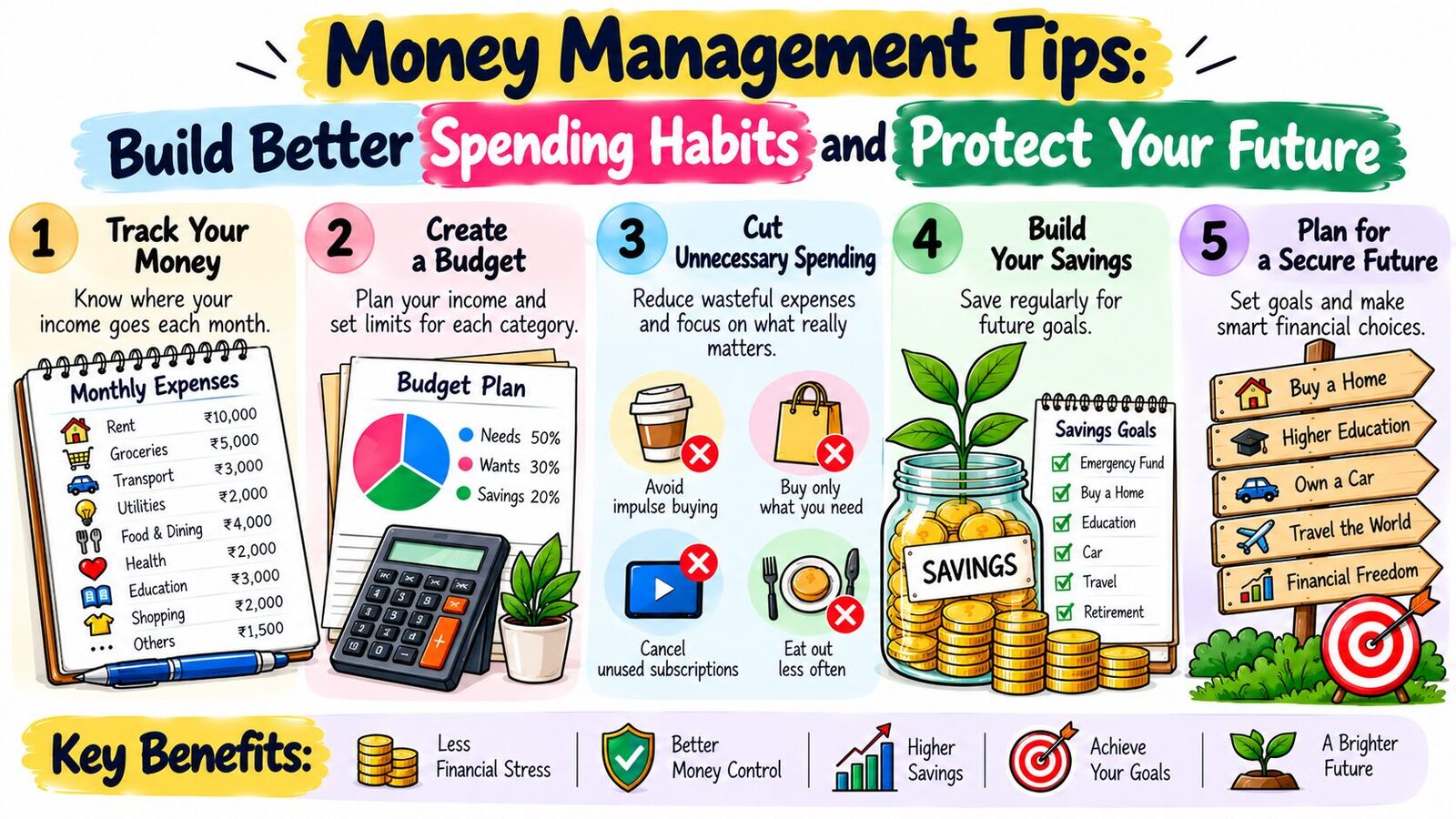
You can use the 50/30/20 rule as a starting guide. It suggests putting 50% of your income toward needs, 30% toward wants, and 20% toward savings and debt reduction.
For a monthly income of ₹35,000, this guide suggests ₹17,500 for needs, ₹10,500 for wants, and ₹7,000 for savings and debt reduction.
Your real costs may require a different split. Rent, health expenses, and family duties can affect your budget.
Set limits that fit your life. Review them each month and make changes when necessary.
4. Find Ways to Spend Less
Small purchases can take up more money than you expect. Regular snacks, online orders, and delivery charges can add up over time.
Suppose you spend ₹100 on unplanned purchases each day. Over 30 days, that habit costs ₹3,000.
You can reduce these costs without giving up everything you enjoy. Try these simple steps:
Make a shopping list before buying groceries.
Compare prices before ordering online.
Set a weekly limit for optional purchases.
Avoid buying things only because they are on sale.
Wait 24 hours before making an unplanned purchase.
Check delivery fees and other extra charges.
Review your spending after a few weeks. Keep the changes that work and adjust those that feel too difficult.
Use the money you save for an important goal. This makes each spending change more useful.
5. Make Saving a Regular Habit
Saving works best when you plan for it in advance. If you wait until the end of the month, other expenses may use up your money.
Choose a monthly amount that fits your budget. Set it aside after you receive your income, once you have planned for essential costs and required payments.
Saving ₹500 each month gives you ₹6,000 over one year before interest or withdrawals. Saving ₹2,000 each month gives you ₹24,000 over the same period.
Start with a small amount if needed. You can increase it when your income grows or your costs fall.
Give your savings a clear purpose. You might save separately for emergencies, education, repairs, or a planned purchase.
Check your progress every month. Regular saving can help you build confidence and prepare for future needs.
6. Prepare for Unexpected Expenses
Life does not always follow your budget. A medical need, urgent repair, or loss of income can create sudden costs.
An emergency fund helps you handle these situations. It may also reduce your need to borrow money when you face a difficult period.
Start with a small target, such as ₹5,000. Then work toward three to six months of essential living costs, based on your needs and income stability.
Keep this money separate from your daily spending funds. Choose a safe place where you can access it when necessary.
Use the fund for genuine emergencies. Planned shopping and regular bills should remain part of your normal budget.
If your income is limited, save small amounts whenever possible. Even a modest fund can provide some support during a crisis.
7. Review Monthly Subscriptions and Payments
Recurring payments can quietly reduce your available money. These may include streaming services, mobile plans, gym memberships, cloud storage, and software.
You may still pay for a service that you rarely use. Some services also renew after a free trial ends.
Check your bank statements, card records, and app subscriptions. Review email receipts to find payment dates and costs.
Create a list that includes the service name, price, renewal date, and reason for keeping it.
For example, a service that costs ₹299 each month costs ₹3,588 over a year. Three unused services at that price would cost ₹10,764 annually.
Cancel services that no longer provide enough value. Keep those that support your work, learning, or daily needs.
MoneyVoid focuses on expense awareness and recurring cost management as part of its intended direction. Confirm its current features before relying on any specific service.
8. Save for Bills That Come Once a Year
Some bills arrive only once or twice a year. These may include insurance premiums, school fees, yearly memberships, and vehicle expenses.
People often forget these costs when they make a monthly budget. This can create pressure when the payment becomes due.
List your expected yearly bills. Divide each amount by twelve and save that amount every month.
For example, if your annual insurance costs ₹12,000, save ₹1,000 each month. You will have the planned amount ready when the bill arrives.
Use a calendar to record payment dates. Set reminders before each due date so you have time to prepare.
This approach works for other planned expenses too. Regular preparation can make large bills easier to manage.
9. Choose a Debt Repayment Strategy
Debt can reduce the money you have for savings and daily needs. Interest charges can also make borrowing more expensive over time.
Start by listing each debt. Record the amount you owe, interest rate, minimum payment, and due date.
Then choose a repayment method.
Highest-interest method: Make every required payment and direct extra money toward the debt with the highest interest rate. This can reduce the total interest you pay.
Smallest-balance method: Make every required payment and direct extra money toward the smallest debt. Clearing a balance may help you stay motivated.
Choose a method that you can follow. Keep required payments up to date and avoid borrowing more for optional purchases.
If you expect difficulty with a payment, contact your lender early. Ask about possible options before the situation becomes worse.
10. Plan for Income That Changes
Freelancers, small business owners, and independent workers may not earn the same amount every month. They need a budget that can handle changes in income.
Begin by calculating your essential monthly costs. Include housing, food, transport, bills, and required debt payments.
Use a cautious income estimate for regular spending. Do not make long-term commitments based on one unusually strong month.
When you earn more than expected, save some extra money. This can help cover expenses during slower periods or when customers pay late.
Review your earnings each month. Look for patterns that help you prepare for future changes.
If you run a business, keep personal and business money separate. This makes it easier to understand your actual earnings and operating costs.
11. Watch Your Business Cash Flow
A business needs enough cash to pay bills and continue its daily work. Sales alone do not show whether the business has enough money available.
Track the money coming in and going out. Include salaries, rent, software, supplies, advertising, and loan payments.
Two terms can help you understand your cash position.
Burn rate measures how quickly a business uses cash over a set period.
Cash runway estimates how long the available cash may last if the current rate of cash loss continues.
Suppose a startup has ₹12 lakh in cash. It spends ₹2 lakh more than it earns each month. Its simple estimated runway is six months.
This estimate assumes the monthly cash loss stays steady. Changes in revenue, costs, or funding can affect the result.
Review cash flow regularly. Reduce waste where possible, but protect the spending that helps your business serve customers.
12. Keep Digital Payments Safe
Digital payments make daily tasks quick and convenient. However, scammers may use fake calls, messages, links, and payment requests to steal money.
Protect yourself with these simple steps:
Never share your UPI PIN or bank password.
Check the receiver's details before sending money.
Never enter your UPI PIN to receive money.
Avoid unknown links that ask for banking information.
Do not install apps at an unknown caller's request.
Turn on bank transaction alerts.
Check your account for unfamiliar payments.
If you notice fraud, contact your bank or payment provider immediately. In India, call 1930 to report financial cyber fraud. You can also report the incident through the official National Cyber Crime Reporting Portal.
Quick reporting may help the response process, but it does not guarantee a refund. Keep your transaction details and complaint records.
Use trusted services and protect your personal information. Read privacy terms before sharing financial data with any tool.
13. Choose a Money Tracking Method
A tracking tool can help you keep your financial records in one place. However, you do not need an expensive app to begin.
You can use a notebook for basic records. A spreadsheet may help you compare expenses. A suitable budgeting app may offer other tracking options.
Choose a method that helps you review:
Monthly income.
Daily and monthly expenses.
Upcoming bills.
Savings progress.
Debt balances.
Recurring payments.
Update your records each week. At the end of the month, compare your actual spending with your budget.
MoneyVoid aims to help people understand their expenses and recurring costs. Treat this as its intended focus, not proof that every feature is currently available.
A tracking tool supports your decisions. You still need to check the figures and choose the right changes.
Frequently Asked Questions (FAQs)
1. How can I improve my money management?
Start by listing your income and expenses. Create a realistic budget and review your spending every week.
2. How can I reduce unnecessary spending?
Track small purchases and set limits for optional costs. Compare prices and avoid buying items you do not need.
3. How much money should I save each month?
Choose an amount that fits your income and essential costs. Start small and increase it when your budget allows.
4. What does a monthly budget help me do?
A budget helps you plan spending, prepare for bills, and set money aside for future goals.
5. Why should I build an emergency fund?
It helps you cover unexpected costs and may reduce your need to borrow money during difficult times.
6. How do I find subscriptions I no longer use?
Review bank statements, card records, app subscriptions, and email receipts. Cancel services that no longer provide enough value.
7. How can I prepare for annual bills?
List your yearly expenses and divide each amount by twelve. Save that amount monthly so you can pay each bill on time.
8. Which debt should I repay first?
You can focus on the debt with the highest interest rate or the smallest balance. Keep making every required payment.
9. How can I manage an irregular income?
Build your budget around essential costs and a cautious income estimate. Save extra money during stronger months.
10. What is cash runway in business?
Cash runway estimates how long a business can continue using its available cash at the current rate of cash loss.
11. What should I do if I face UPI fraud?
Contact your bank or payment provider immediately. In India, call 1930 and report the incident through official cybercrime channels.
12. What does MoneyVoid focus on?
MoneyVoid focuses on expense awareness and recurring cost management. Check its current service details to confirm which features are available.
Final Thoughts
Better financial habits begin with clear records and realistic goals. Track your spending, plan your bills, and save regularly. Small changes can help you use your income more wisely.
Prepare for emergencies and review your subscriptions. Follow a debt repayment plan that fits your situation. If you run a business, check your cash position often.
Protect your payment details and report suspicious activity quickly. Review your budget each month and adjust it when your needs change. Start with one practical step today and build from there.